The latest escalation in Iran and the Middle East has sent ripples far beyond the region’s borders. As Tehran moves to restrict passage through the Strait of Hormuz, the knock-on effects are being felt in some of the most unexpected places – including the European supermarket shelf. The strait is a critical artery for the global flow of synthetic fertiliser and any sustained disruption there doesn’t merely signal an energy crisis; it signals a fertiliser shock, with prices spiking and supply thinning. And some argue that from there, it’s a short, uncomfortable road to genuine food security risk.
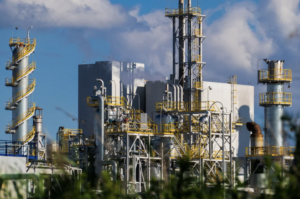
Modern agriculture, particularly in highly industrialised systems, is deeply entangled with these global input chains. Synthetic fertilisers do not simply appear at the farm gate; they are produced, traded, and transported through the same vulnerable networks now under strain. When those networks falter, farmers are left exposed to volatile prices and uncertain supply. In that sense, what begins as a geopolitical disruption quickly becomes an agricultural one.
But not everyone is caught in the same bind, organic farmers are sitting in a rather different position.
A Different Kind of Soil Story
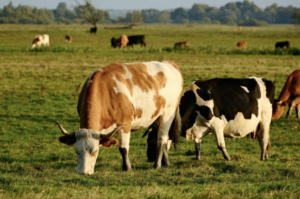
In organic agriculture, synthetic fertilisers are not allowed. Instead, it works with animal manure, plant residues, and carefully managed nutrient cycles – a loop in which fertility is generated on the farm rather than imported from a petrochemical plant. Nitrogen, an essential macronutrient for all plants, comes not from a factory in the Gulf region, but from organic sources such as manure and from legumes like field beans and clover, which host nitrogen-fixing bacteria in their roots and draw it directly from the air. This reduces reliance on external inputs, and with it exposure to price volatility and supply disruptions.
This is often described not just as a question of resilience, but as a structural difference in how fertility is maintained. At a moment when the cost of conventional farming inputs is climbing sharply, organic producers are largely insulated – not by accident, but because their entire model is built around not needing those inputs in the first place.
Feeding the Soil and Sustaining the Future
The nutrient cycle in organic farming is, in its own way, quietly elegant. Manure from animals fertilises the land, which grows the feed which nourishes the animals, and so on. But beyond simply replacing synthetic inputs, this approach does something that no bag of chemical fertiliser can do – it feeds the life in the soil.
Worms, fungi, bacteria, beetles – a thriving below-ground community that most of us never think about. These organisms are responsible for a suite of services that modern agriculture often takes for granted: building and maintaining soil structure, cycling nutrients, suppressing pets naturally, storing carbon, and regulating water. A third of everything we eat, depends partly or fully on pollination by animals at s, one of those ecosystem services that only functions when biodiversity is healthy. Organic soil management actively supports that biodiversity, rather than suppressing it with chemicals that, frankly, don’t discriminate well.
There’s also the question of resilience over time. Soils rich in biological life are demonstrably more capable of withstanding stress, whether that stress comes from drought, flooding, or the shifting seasonal patterns that climate change is already delivering. In a world where extreme weather is becoming routine rather than exceptional, that resilience isn’t a nice-to-have, it’s quietly becoming essential.
The Bigger Picture
Crises have a way of making visible what was always true but easy to ignore. The current fertiliser shock is one of those moments. It reveals just how deeply conventional agriculture is entangled with geopolitical volatility and how quietly, methodically, organic farming has been building a different relationship with the land. One rooted not in extraction and dependency, but in cycles, reciprocity, and soil that gets richer rather than poorer over time. That has long been one of the arguments in favour of organic systems – and current developments are bringing it into sharper focus.
References and further reading
¤ Nature – How fertilizer shortages caused by the energy crisis threaten food security
¤ Our World in Data – How much of the world’s food production is dependent on pollinators?