When it comes to the European market, the most dependable anchor in this sea of claims is the EU Organic Logo – the green leaf composed of stars. Unlike vague buzzwords, this label is legally protected. For a product to carry this leaf, at least 95% of the weight of its agricultural ingredients, must be certified organic.
It is not merely about the icon, however. There are specific technical requirements behind that little leaf: the label must be accompanied by a code number from the relevant control body, along with an indication of where the ingredients were farmed, for example: “EU Agriculture” or Non-EU Agriculture”. This ensures that a product’s journey from soil to shelf is fully traceable, and that someone, somewhere, is accountable for every stage of it.
For buyers and distributors, this traceability is not just reassuring, it is increasingly essential. As retailer standards rise and consumer scrutiny deepens, the ability to point to a verifiable certification chain has become a genuine commercial asset.
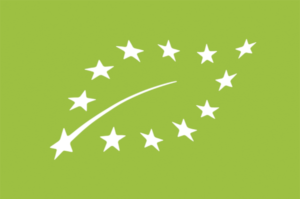
The EU Organic Logo.
Awareness vs. Understanding
Interestingly, whilst the EU Leaf sets the baseline for organic food across Europe, a significant literacy gap remains. A survey amongst conscious consumers in London revealed that 44% recognise the EU Leaf. Yet only 12% of the truly understand what the label signifies, whilst further 32% have only a partial idea of its meaning.
This gap matters. A consumer who cannot distinguish between a legally verified certification and a self-declared sustainability claim is a consumer who is vulnerable to greenwashing – and one who may, over time, grow sceptical of the organic category altogether. This means that investing time in label education is not merely an ethical consideration; it is a strategic one.
National Certifications
In markets such as Sweden and the United Kingdom, national private certifications often take centre stage alongside the EU baseline. KRAV in Sweden and the Soil Association in the UK are both widely recognised and frequently regarded as an “organic-plus” because they apply standards that go beyond EU requirements, particularly around animal welfare, social responsibility, and environmental impact.
The KRAV Logo.
KRAV, for instance, incorporates rules on fair working conditions and restricts certain practices that are technically permissible under EU organic law. The Soil Association similarly applies more rigorous welfare standards for livestock and stricter limits on permitted substances. For the conscious consumer, these marks signal a deeper level of commitment. For a retailer curating a premium range, they offer a meaningful point of differentiation.
The Soil Association Organic Symbol.
The density of such certifications in specialist retail is striking. In niche retailers such as Planet Organic, the proportion of certified products is notably high – 112 out of 210 snack bars in their inventory carry an organic certification. For buyers working in this space, fluency in the distinctions between certifications is not optional, it is part of the job.
Empowering Consumers Directive
To combat greenwashing more broadly, the EU is stepping up with the Empowering Consumers for the Green Transition Directive. The ambition is straightforward: if a company claims a product is green, it must be able to substantiate that claim with recognised scientific evidence. Vague assertions such as “eco-fiendly”, “sustainable”, or “kind to the earth”, without verified backing will no longer be permissible.
This directive aims to thin out the label jungle considerably, making it easier for consumers to trust that an eco-label represents a genuinely verified environmental benefit, rather than simply a pleasing verdant shade of packaging. For retailers and distributors, the implications are significant: products that currently rely on unsubstantiated environmental claims will need to be re-evaluated, and sourcing decisions will increasingly need to account for a supplier’s ability to meet evidentiary standards.
In practice, this may accelerate a shift towards established certification bodies, precisely because they already provide the kind of documented, auditable standards that the directive is likely to require.
What Does This Mean?
Whether you are a consumer trying to shop with integrity, or a buyer responsible for curating a range that meets the expectations of increasingly informed shoppers, the landscape of organic certification is worth understanding properly.
The EU Organic Logo is your legal baseline, a guarantee not a suggestion. National marks such as KRAV and the Soil Association signal that a producer has gone further still. And as the Green Claims Directive takes hold, the gap between genuine certification and marketing noise is set to widen – in the right direction.
The forest of green stickers may not be going away, however, the more you know about what is actually behind each one, the easier it becomes to find your way through it.