Sweden has a long tradition of serving free meals to pupils. Every day, around 3.4 million meals are served in Swedish public kitchens, in preschools, schools, hospitals, care homes and public workplaces. Over the past two decades, these meals have become an increasingly powerful driver of organic food consumption, transforming public catering into one of the most important markets for organic products in Sweden. The high share of organic purchases can also serve as inspiration for consumers on how to buy and cook with organic products with a tight budget.
 Serving organic foods in public kitchens creates bridges between pupils and local organic farmers.
What Organic Public Catering Looks Like in Practice
Organic food in Swedish public kitchens covers a wide range of products. Milk and dairy products dominate organic purchases and have been prioritised for more than a decade. Other commonly used organic items include coffee, tea, fruit and cereals and pulses. A common assumption is that organic food is too expensive for public kitchens, however Swedish experiences suggests otherwise. Successful kitchens have redesigned menus by reducing meat portions, increasing seasonal vegetables, grains and legumes, and actively minimising food waste. Cities such as Gothenburg, Södertälje and Örebro have demonstrated that high organic shares can be achieved without increasing the overall cost per meal. This approach has also delivered positive side effects, including healthier diets and lower climate impact.
 This wrap is called “Södertäljerullen”. Developed for public kitchens by the Swedish star chef Mathias Dahlgren.
Photo: MatLust Utvecklingsnod
Why Sweden Can Be a Model for Sustainable Food Systems
Sweden’s commitment to organic food in the public sector is driven by a combination of environmental, social and economic objectives, and serves as an important tool for reaching national sustainability targets. Public procurement is seen as a strategic driver in achieving high organic agricultural acreage.
Strict third-party certification ensures high levels of food safety, traceability and quality control, minimising the risk of food fraud. At the same time, climate-smart menu planning – with more plant-based meals, seasonal produce and active food waste reduction – helps lower the overall environmental footprint of public meals. By prioritising organic products of Swedish origin, public procurement also supports local farmers, rural development and resilient domestic food systems. Finally, school meals play an important educational role, shaping children’s understanding of sustainable food choices and influencing future consumption patterns.
Another reason behind Sweden’s success is a national benchmarking system developed by the non-profit organisation Ekomatcentrum. Through its annual ranking “Ekomatligan” municipalities, regions and public authorities are measured and compared based on their share of organic food procurement. The transparent ranking system has created a healthy sense of competition and progress. By publicly highlighting best performers and showcasing what is achievable, the system motivates lagging organisations to improve. It also keeps organic procurement high on the political agenda, despite Sweden’s national targets being voluntary rather than mandatory.
Sweden’s experience shows how public food procurement can become a strategic tool for sustainability, innovation and market development. As the European Union’s Farm to Fork strategy targets 25% organic farmland by 20230, public catering is expected to play an even greater role in driving demand and supporting farmers through the transition. In a European context, Sweden’s public sector model offers valuable insights into how policy, procurement and practice can work together to create lasting impact.
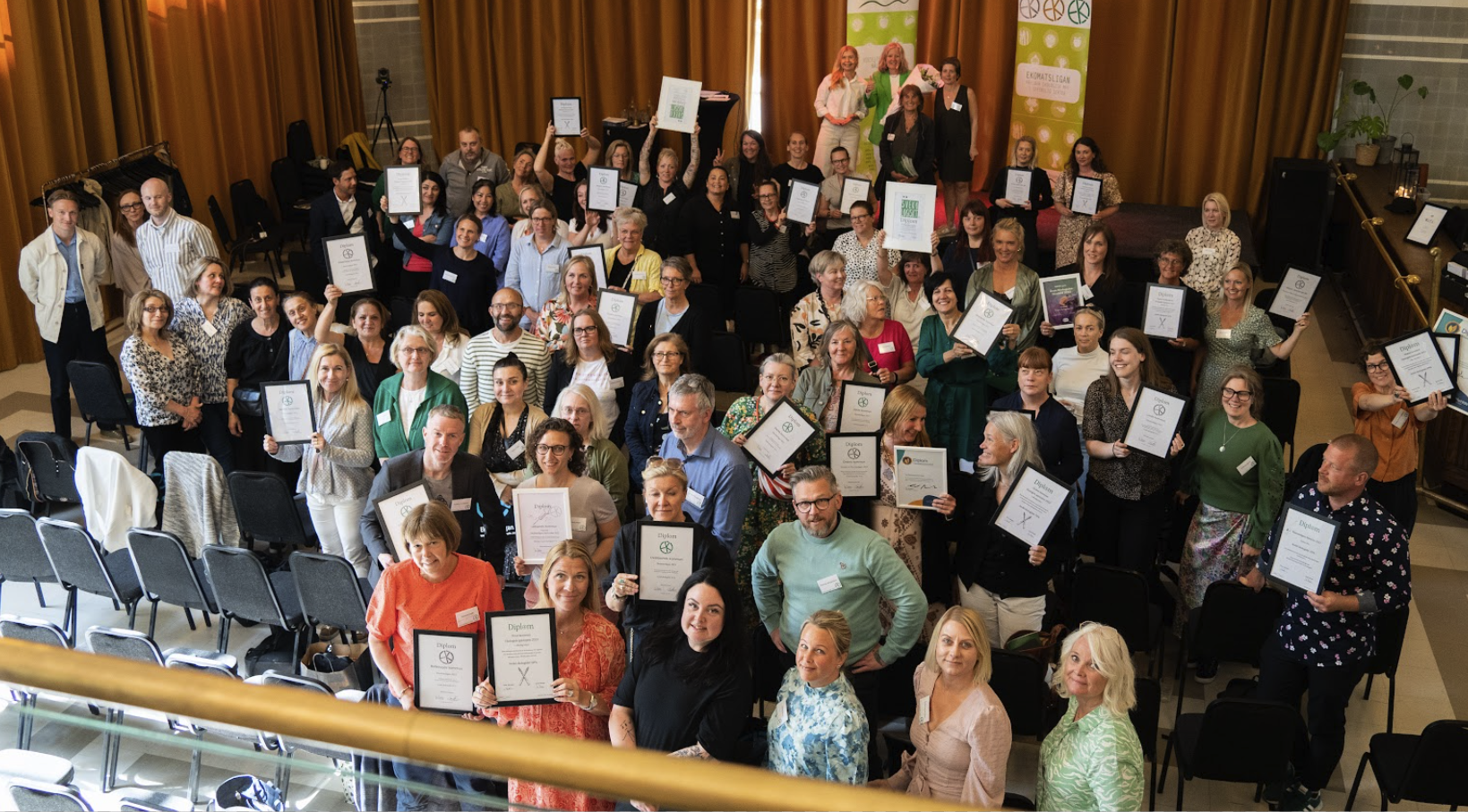 Public canteen professionals gathered and awarded at Ekomatligan.
Are you curious about how meals cooked with a lot of organic produce can look and taste like? Check out these recipes from the municipality of Södertälje.